Friday, February 25, 2011
Stoke Newington Birds has moved......
..... and the complete guide to the birds of Stoke Newington Reservoirs can now be found at the dedicated website snrbirds.org.uk
Friday, March 14, 2008
We've moved!
Stoke Newington Birds is now integrated into the bigger, better and more comprehensive Hackney Wildlife - www.hackneywildlife.org.uk .
Thanks to all visitors and thanks for your comments over the past couple of years. In time, a full photgraphic and seasonal / annual archive will be built up, again incorporated into our new home.
HWG are seeking your input to make the latest news section as comprehensive, up-to-the-minute and borough-wide as possible. Please send us your sightings, photographs, drawings etc., and we'll publish as much as we can. Sightings and photos will recieve credits and will be passed on to the relevant recording organisations.
email us at info@hackneywildlife.org.uk
Thanks to all visitors and thanks for your comments over the past couple of years. In time, a full photgraphic and seasonal / annual archive will be built up, again incorporated into our new home.
HWG are seeking your input to make the latest news section as comprehensive, up-to-the-minute and borough-wide as possible. Please send us your sightings, photographs, drawings etc., and we'll publish as much as we can. Sightings and photos will recieve credits and will be passed on to the relevant recording organisations.
email us at info@hackneywildlife.org.uk
Wednesday, March 05, 2008
5th March 2008
Stoke Newington West Reservoir MJP, PR
sunny, brisk NW.
Very little to report except the usual suspects, although the pair of breeding Grey Wagtails are showing especially well on the boardwalk in front of the cafe, and loafing gull numbers are still high, with c200 Black-headed, c40 Common, 8 Lesser Black-backs and a 7 Herrings.
sunny, brisk NW.
Very little to report except the usual suspects, although the pair of breeding Grey Wagtails are showing especially well on the boardwalk in front of the cafe, and loafing gull numbers are still high, with c200 Black-headed, c40 Common, 8 Lesser Black-backs and a 7 Herrings.
Tuesday, March 04, 2008
4th March 2008
Back after a long weekend of musical activities in Herfordshire and Wales, which provided brief opportunities to enjoy the local countryside and its birds - the highlights being a particularly strong showing of Red Kites along a stretch of the M40 near Oxford, where at least 50 birds performed close by in the sunshine, along with numerous Common Buzzards en route; large numbers of winter thrushes (with flocks of several hundred birds) along the Welsh / English border; a couple of hours in the Forest of Dean, with various locally common species (Nuthatches, Bullfinches, Treecreepers etc.); and a drive home through the night brightened up by several Barn Owls.
two sites today:
Walthamstow Marshes 1100-1250 MJP, JA
mainly bright with sunny intervals, cold. blustery N.
Little Owl - 1
Jackdaw - 1W
Fieldfare - c60
Redwing - c30
Meadow Pipit - 6
Siskin - 1 over
A distinctly wintery feel on the marshes today, with the hope of the first spring migrant (e.g. an early Sand Martin or Wheatear) seemingly remaining a vain one; with cool weather and northerly winds forecast for the next few days, it may be a while yet before such heart-lifters make it into the local area, but the anticipation grows....
Abney Park Cemetery
nothing of note, but the common spp. continue their spring-influenced activities, with Great Spotted Woodpeckers being especially hard to avoid.
Nothing of note elsewhere in the local area either, with the usual suspects at the Reservoirs (common wildfowl, Reed Buntings, Grey Wagtails, good numbers of the commoner gull spp.) and Clissold Park (Shovelers and Pochards on the lake, a few Redwings and the now omnipresent Rose-ringed Parakeets in the trees).
two sites today:
Walthamstow Marshes 1100-1250 MJP, JA
mainly bright with sunny intervals, cold. blustery N.
Little Owl - 1
Jackdaw - 1W
Fieldfare - c60
Redwing - c30
Meadow Pipit - 6
Siskin - 1 over
A distinctly wintery feel on the marshes today, with the hope of the first spring migrant (e.g. an early Sand Martin or Wheatear) seemingly remaining a vain one; with cool weather and northerly winds forecast for the next few days, it may be a while yet before such heart-lifters make it into the local area, but the anticipation grows....
Abney Park Cemetery
nothing of note, but the common spp. continue their spring-influenced activities, with Great Spotted Woodpeckers being especially hard to avoid.
Nothing of note elsewhere in the local area either, with the usual suspects at the Reservoirs (common wildfowl, Reed Buntings, Grey Wagtails, good numbers of the commoner gull spp.) and Clissold Park (Shovelers and Pochards on the lake, a few Redwings and the now omnipresent Rose-ringed Parakeets in the trees).
Friday, February 29, 2008
29th February 2008
Walthamstow Marshes 1050-1240 MJP
o/c, dull, coll. blustery W.
Fieldfare - c45
Redwing - c35
Meadow Pipit - c12
Abney Park Cemetery 1300-1450 MJP
little to report, but three pair of Stock Doves paired up and various common species nest-building / hole prospecting.
o/c, dull, coll. blustery W.
Fieldfare - c45
Redwing - c35
Meadow Pipit - c12
Abney Park Cemetery 1300-1450 MJP
little to report, but three pair of Stock Doves paired up and various common species nest-building / hole prospecting.
28th February 2008
BTO Atlas recording throughout Stoke Newington today, completing the late winter visit. Nothing out of the ordinary, but all the regular sites covered, and an opportunity to visit several smaller, less obvious sites.


(from the top: Canada Geese at the West Reservoir; Reed Bunting along the New River path East Reservoir; Shovelers in Clissold Park; male House Sparrows, Moorhen and Rose-ringed Parakeet in Clissold Park; Dunnock, Robin and Stock Dove in Abney Park Cemetery.)


(from the top: Canada Geese at the West Reservoir; Reed Bunting along the New River path East Reservoir; Shovelers in Clissold Park; male House Sparrows, Moorhen and Rose-ringed Parakeet in Clissold Park; Dunnock, Robin and Stock Dove in Abney Park Cemetery.)
Tuesday, February 26, 2008
25th & 26th February 2008
26th Feb - Walthamstow Marshes 1045-1230 MJP, JA
bright, mainly sunny; brisk WSW.
Jack Snipe - 1
Common Snipe - 27
Fieldfare - 52
Redwing - 3
Linnet - pair
Stock Dove - 7
Stonechat - 1 female
Reed Bunting - 2
Meadow Pipit - 16


(Fieldfares in the Horse Field. Numbers are down slightly from last last week, but are still high.)
An excellent late winter / early spring day on the marshes, mainly thanks to the Bombcrater Field. Lacking the cattle which are often employed to graze this fenced-off, marshy field, in recent months I've occasionally walked within its boundaries to count numbers of Common Snipe, which from this season's experience are apparently omnipresent during the winter months in this area. From the field's perimeter, none can be seen, and it's hard to imagine such a small, disturbed, urban site attracting such numbers.
Limiting my own contribution to disturbing the field to once every few weeks in the winter (and never in the summer, when ideally the gates and open-plan fencing around the field would be sealed off), between 2 and 20 Common Snipe have been present, with high single figures being the norm. Today's surprisingly high count of 27 is possibly the result of a combination of last night's heavy storms, and the time of year (when birds are en route between wintering and breeding grounds). To flush a single Jack Snipe from the same field, near the ponds - an area first for me, after several years hoping for one - was an unexpected bonus.
(It's worth pointing out that, while the field isn't private, too much disturbance of course isn't a good thing for the wildlife there. Today will probably be my last walk through the field for several months, and views of most species can be obtained from the perimeter fence. Indeed, of the range of species which might be expected as 'specialities' of the field - including Stonechat, Whinchat, Meadow Pipit, Skylark, Wheatear, Yellow Wagtail and Reed Bunting - almost all my better views have come from the open, public land surrounding it on all sides.)
Abney Park Cemetery 1300-1450 MJP
little to report except for the common breeding species, although two pairs of Stock Doves were present at suitable nest-holes.


(from the top - Woodpigeon, Song Thrush, Jay, Great Spotted Woodpecker)
25th Feb - Stoke Newington Reservoirs MJP
a brief visit from the north-east corner of the ER.
Great Black-backed Gull - 1 ad.
Blackcap - 1 singing
Jackdaw - 3 over
Grey Wagtail - 2
bright, mainly sunny; brisk WSW.
Jack Snipe - 1
Common Snipe - 27
Fieldfare - 52
Redwing - 3
Linnet - pair
Stock Dove - 7
Stonechat - 1 female
Reed Bunting - 2
Meadow Pipit - 16


(Fieldfares in the Horse Field. Numbers are down slightly from last last week, but are still high.)
An excellent late winter / early spring day on the marshes, mainly thanks to the Bombcrater Field. Lacking the cattle which are often employed to graze this fenced-off, marshy field, in recent months I've occasionally walked within its boundaries to count numbers of Common Snipe, which from this season's experience are apparently omnipresent during the winter months in this area. From the field's perimeter, none can be seen, and it's hard to imagine such a small, disturbed, urban site attracting such numbers.
Limiting my own contribution to disturbing the field to once every few weeks in the winter (and never in the summer, when ideally the gates and open-plan fencing around the field would be sealed off), between 2 and 20 Common Snipe have been present, with high single figures being the norm. Today's surprisingly high count of 27 is possibly the result of a combination of last night's heavy storms, and the time of year (when birds are en route between wintering and breeding grounds). To flush a single Jack Snipe from the same field, near the ponds - an area first for me, after several years hoping for one - was an unexpected bonus.
(It's worth pointing out that, while the field isn't private, too much disturbance of course isn't a good thing for the wildlife there. Today will probably be my last walk through the field for several months, and views of most species can be obtained from the perimeter fence. Indeed, of the range of species which might be expected as 'specialities' of the field - including Stonechat, Whinchat, Meadow Pipit, Skylark, Wheatear, Yellow Wagtail and Reed Bunting - almost all my better views have come from the open, public land surrounding it on all sides.)
Abney Park Cemetery 1300-1450 MJP
little to report except for the common breeding species, although two pairs of Stock Doves were present at suitable nest-holes.


(from the top - Woodpigeon, Song Thrush, Jay, Great Spotted Woodpecker)
25th Feb - Stoke Newington Reservoirs MJP
a brief visit from the north-east corner of the ER.
Great Black-backed Gull - 1 ad.
Blackcap - 1 singing
Jackdaw - 3 over
Grey Wagtail - 2
Dungeness, Kent - 24th February 2008
A fine Sunday out of the city and onto the coast with Paul C, with bright, often sunny skies and a brisk westerly wind.
Highlights on or over the sea included a Black-throated Diver, double figures of Red-throated Divers, several hundred auks moving east (the majority of those positively IDed being Guillemots, but Razorbill also recorded), c250 dark-bellied Brent Geese moving east often close in, plenty of Gannets, Great Crested Grebes, Kittiwakes and the commoner gulls, and small numbers of Eider, Common Scoter and Goldeneye at sea.
On the land (and freshwater), highlights included a very smart adult winter Slavonian Grebe, about a dozen pristeen Smew giving great views on the RSPB reserve (including at least four drakes), six Goosander and c35 Goldeneye amongst the impressive numbers of the commoner ducks (especially Wigeon and Shoveler), the Peregrines kindly indulging in pair-bonding directly overhead, four singing Cetti's Warblers and a single singing Chiffy, a cream-crown Marsh Harrier and a very tolerant female Merlin.
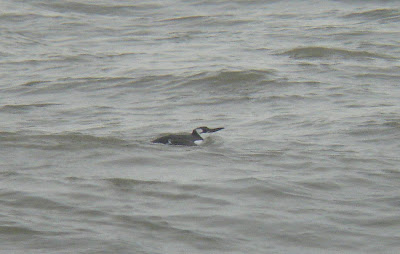
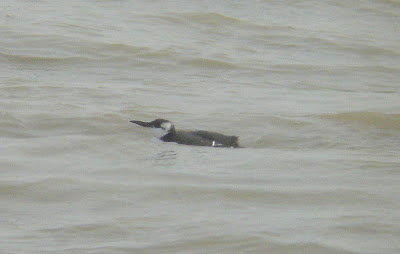


(from the top: ad. winter Guillemot with abnormally-shaped bill, a group of Smew, a male Goldeneye feeling the effects of a warm spring day, a female Marsh Harrier panicking a Lapwing flock, female Goosander with male Smew, adult Kittiwake, and Slavonian Grebe)
Highlights on or over the sea included a Black-throated Diver, double figures of Red-throated Divers, several hundred auks moving east (the majority of those positively IDed being Guillemots, but Razorbill also recorded), c250 dark-bellied Brent Geese moving east often close in, plenty of Gannets, Great Crested Grebes, Kittiwakes and the commoner gulls, and small numbers of Eider, Common Scoter and Goldeneye at sea.
On the land (and freshwater), highlights included a very smart adult winter Slavonian Grebe, about a dozen pristeen Smew giving great views on the RSPB reserve (including at least four drakes), six Goosander and c35 Goldeneye amongst the impressive numbers of the commoner ducks (especially Wigeon and Shoveler), the Peregrines kindly indulging in pair-bonding directly overhead, four singing Cetti's Warblers and a single singing Chiffy, a cream-crown Marsh Harrier and a very tolerant female Merlin.


(from the top: ad. winter Guillemot with abnormally-shaped bill, a group of Smew, a male Goldeneye feeling the effects of a warm spring day, a female Marsh Harrier panicking a Lapwing flock, female Goosander with male Smew, adult Kittiwake, and Slavonian Grebe)
22nd & 23rd February 2008
22nd Feb - Walthamstow Marshes 1000-1130 MJP
Meadow Pipit - 22
Common Snipe - 2
Greylag - c20

gorse in bloom, Walthamstow Marshes
23rd Feb - Abney Park Cemetery
Siskin - 2 feeding in treetops near Church St. entrance
Meadow Pipit - 22
Common Snipe - 2
Greylag - c20

gorse in bloom, Walthamstow Marshes
23rd Feb - Abney Park Cemetery
Siskin - 2 feeding in treetops near Church St. entrance
Tuesday, February 19, 2008


Monday, February 18, 2008
15th & 17th February 2008
17th February: Abney Park Cemetery
sunny, clear.
Blackcap - male in song
15th February: Walthamstow Marshes
Fieldfare - 89
Redwing - 42
Little Grebe - 2
Meadow Pipit - 12
Grey Wagtail - 3


Colt's-foot, Walthamstow Marshes


Adult Grey Heron, Lea Navigation
15th February: Stoke Newington Reservoirs
Red-crested Pochard - pair (long stayers)
Grey Wagtail - 3
Reed Bunting - 2
Kingfisher - 1
sunny, clear.
Blackcap - male in song
15th February: Walthamstow Marshes
Fieldfare - 89
Redwing - 42
Little Grebe - 2
Meadow Pipit - 12
Grey Wagtail - 3


Colt's-foot, Walthamstow Marshes


Adult Grey Heron, Lea Navigation
15th February: Stoke Newington Reservoirs
Red-crested Pochard - pair (long stayers)
Grey Wagtail - 3
Reed Bunting - 2
Kingfisher - 1
Tuesday, February 12, 2008
12th February 2008
two local sites covered today, on a clear, sunny, mild and spring-like day (after the fog had cleared):
Hackney Marshes 1100-1300 MJP
Fog clearing, then bright and sunny. little wind.
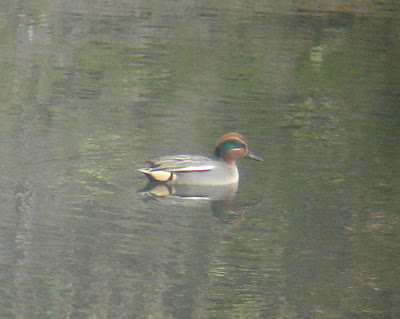
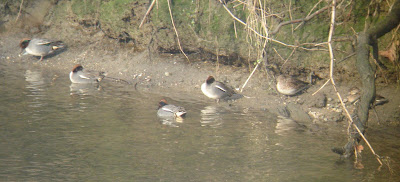
Teal - 66
Gadwall - 19
Brambling - 2
Green Sandpiper - 1
Siskin - 2
Kingfisher - 2
Fieldfare - 10
Redwing - 5
Kestrel - 1
Sparrowhawk - 1
Grey Wagtail - 1
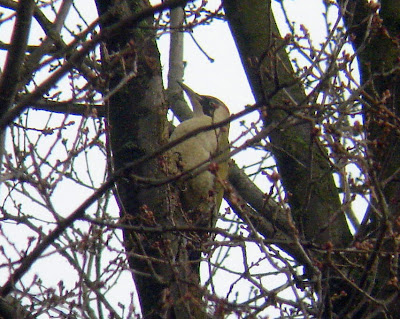
Green Woodpecker - 2
GS Woodpecker - 2



Abney Park Cemetery 1330-1500 MJP
mild, sunny.
Blackcap - 1 male, in song
Coal Tit - 1 male, in song
Entertaining birding at both sites. I rarely get the chance to cover the whole of Hackney Marshes, but with the time to do so today and the weather being so beautiful, I walked the length of the river from bridge to bridge, and the variety and quality of late winter/early spring species were a pleasure.
Highlights included: the wintering Teal along the river, which offer great views as they tolerate disturbance on all sides, and feed / loaf happily just a few metres from the path; two Kingfishers; a Green Sandpiper on the mud towards the southern end; winter thrushes feeding along the edge of the wood, on the playing fields; and winter finches, in the form of two Bramblings, feeding with Chaffinches, and two Siskins in the treetops.
In Abney, a male Blackcap sang from the northern perimeter, showing well, and a hundred metres or so south, a Coal Tit sang from the conifers behind the chapel. It's the first time this year we've come across either species, and the spring-like day was enhanced by the songs of both.
Hackney Marshes 1100-1300 MJP
Fog clearing, then bright and sunny. little wind.
Teal - 66
Gadwall - 19
Brambling - 2
Green Sandpiper - 1
Siskin - 2
Kingfisher - 2
Fieldfare - 10
Redwing - 5
Kestrel - 1
Sparrowhawk - 1
Grey Wagtail - 1
Green Woodpecker - 2
GS Woodpecker - 2


Abney Park Cemetery 1330-1500 MJP
mild, sunny.
Blackcap - 1 male, in song
Coal Tit - 1 male, in song
Entertaining birding at both sites. I rarely get the chance to cover the whole of Hackney Marshes, but with the time to do so today and the weather being so beautiful, I walked the length of the river from bridge to bridge, and the variety and quality of late winter/early spring species were a pleasure.
Highlights included: the wintering Teal along the river, which offer great views as they tolerate disturbance on all sides, and feed / loaf happily just a few metres from the path; two Kingfishers; a Green Sandpiper on the mud towards the southern end; winter thrushes feeding along the edge of the wood, on the playing fields; and winter finches, in the form of two Bramblings, feeding with Chaffinches, and two Siskins in the treetops.
In Abney, a male Blackcap sang from the northern perimeter, showing well, and a hundred metres or so south, a Coal Tit sang from the conifers behind the chapel. It's the first time this year we've come across either species, and the spring-like day was enhanced by the songs of both.
Subscribe to:
Posts (Atom)